
Analysts predict that crude oil prices, geopolitical tensions in West Asia, and upcoming inflation data will be the primary drivers of the Indian stock market this week, alongside foreign investor activity and domestic quarterly earnings.

Dr Reddy's Laboratories reported a 68.7 per cent year-on-year decline in consolidated net profit to Rs 443.5 crore in Q1 FY27, primarily due to the end of its lenalidomide sales agreement, a Rs 240-crore provision for semaglutide API inventory quality issues, and elevated freight costs.

TCS kicked-off the Q1FY17 earnings season for information technology companies on Thursday.

Indian Hotels Company Ltd (IHCL) is expected to benefit from higher room rates, rising occupancy, and strategic acquisitions, with analysts projecting double-digit revenue growth for FY27 driven by strong domestic demand and a favourable demand-supply dynamic.

Analysts predict that the Reserve Bank of India's interest rate decision, the evolving situation in West Asia involving the US-Iran conflict, and crude oil prices will be the primary factors influencing investor sentiment in the Indian stock market this week.

Infosys has revised down the upper end of its revenue growth target for financial year 2027 (FY27) to 1.5-3 per cent, from the earlier 1.5-3.5 per cent, attributing the change to persistent macroeconomic uncertainty and a one-time client impact.

Wipro on Wednesday reported a 25.9 per cent year-on-year rise in consolidated net profit for the March quarter to Rs 3,569.6 crore, but warned of a weak quarter ahead with up to 3.5 per cent expected drop in IT services revenue for Q1FY26, amid global uncertainties. CEO and Managing Director Srini Pallia said clients remain cautious in the face of macroeconomic uncertainty.

Mahindra & Mahindra (M&M) Ltd reported a significant 34 per cent year-on-year increase in Profit After Tax (PAT) to Rs 5,455 crore for the June quarter, driven by strong performance in its Auto and Farm segments despite challenging macro-economic conditions.

India's statistics ministry has defended its newly released economic growth estimates, stating that revisions to last year's GDP and the divergence between different price measures reflect updated data and estimation techniques rather than an attempt to artificially boost headline growth.

India's eway bill generation reached 139.08 million in August, marking the third-highest monthly count on record and indicating sustained momentum in goods movement and formal economic activity, according to official data.

Bharti Airtel's homegrown cloud platform, Airtel Cloud, has acquired approximately 40 customers within a year of its launch, with a significant portion coming from the manufacturing sector. The platform, designed for Indian companies, offers sovereign, telco-grade cloud infrastructure, connectivity, and GenAI-based provisioning, addressing the growing demand for secure, India-hosted data solutions, particularly for sensitive workloads and regulated sectors.

After four consecutive months of withdrawals, Foreign Portfolio Investors (FPIs) injected Rs 20,200 crore into Indian equities in July, driven by attractive valuations, improving corporate earnings, and a more favourable global environment.

Shares of Tata group's retail firm Trent slumped over 11 per cent after its June quarter standalone revenue growth of 19 per cent to Rs 5,666 crore missed market expectations, which had anticipated a 22 per cent year-on-year increase.

Aditya Birla Capital has entered the gold loan business, aiming to establish 1,000 branches within three years, capitalising on the strong structural growth and surge in demand for gold-backed credit in India.

Indian benchmark stock indices, Sensex and Nifty, declined for a second consecutive day, primarily due to selling pressure in IT, oil & gas, and select banking shares. Concerns over the US-Iran negotiations and a sluggish monsoon further dampened market sentiment.

Economists widely anticipate the Reserve Bank of India's Monetary Policy Committee will increase the repo rate by 50 basis points, likely split between the October and December meetings, as retail inflation is projected to peak at 6.1 per cent in the third quarter, exceeding the RBI's tolerance limit.

Andhra Pradesh Chief Minister N Chandrababu Naidu has set an ambitious target for district collectors to achieve a 15-20 per cent growth rate, building on the state's 13.4 per cent growth in Q1 FY27, the highest in India.

Indian passenger vehicle manufacturers are significantly increasing production and stocking dealerships in anticipation of strong festival season demand, with new launches planned and supply bottlenecks being addressed. However, the industry faces potential moderation in growth during the second half of FY27 due to a high base from last year's post-GST surge, commodity inflation, and elevated inventory levels.

Wipro reported Q4FY26 IT services revenue of $2.6 billion, a modest 0.2 per cent Q-o-Q constant currency growth, with adjusted operating profit margin beating estimates at 17.2 per cent. The company announced a significant share buyback of ~15,000 crore, but faces near-term growth challenges, particularly in the BFSI segment, and has issued a soft Q1FY27 revenue guidance.

L&T surprised on the upside of consensus due to stronger-than-expected growth overseas. The Q1FY25 results were ahead of estimates on both revenue and net profit fronts. The company reported a 15 per cent year-on-year (Y-o-Y) growth in revenues along with 15 per cent Y-o-Y growth in operating profit and 12 per cent Y-o-Y growth in net profit on consolidated basis.

'The changes in its leadership team will help address the scepticism that has engulfed the bank over the recent period.'

Finance Minister Nirmala Sitharaman announced that India's real GDP grew by 7.8 per cent in the April-June quarter, surpassing the RBI's forecast. She attributed this strong performance to government reforms and agile economic management, reaffirming the government's commitment to expanding economic opportunities.

Indian benchmark indices Sensex and Nifty recorded their third consecutive day of gains, primarily driven by an over 8 per cent surge in Bajaj Finance following strong Q1 FY27 results, coupled with significant foreign fund inflows and a dip in crude oil prices.

Tata Consultancy Services (TCS) will make an additional provision of USD 70 million in Q1 FY2027, bringing its total provision to USD 220 million, after the US Supreme Court declined to review a lower court ruling in a trade secrets dispute with Computer Sciences Corporation (now DXC Technology).

Manappuram Finance has announced the appointment of Ashish Singh as its new managing director and chief executive officer, effective January 1, 2027, marking a significant shift from its family-led governance structure.

Morgan Stanley analysts, led by Ridham Desai, predict that the next phase of the Indian market rally will be primarily driven by the April-June quarter (Q1FY27) corporate earnings season and the performance of the monsoon.

Lodha Developers plans to generate approximately 10,000 crore in sales over the next three to four years by monetising about 150 acres of land at its data centre park in Palava, part of the Mumbai metropolitan region (MMR). This strategy is a planned recurring pillar of their business, funding the build-out of 1 gigawatt of powered shell capacity and aiming for over 2,000 crore in annual rental income by FY32.
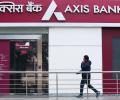
In Q1FY26, the bank reported fresh slippages of 8,200 crore, up 71 per cent Y-o-Y and sequentially. Of this, 7,500 crore is from the retail segment.

FMCG giant Nestle India reported a significant 48.26 per cent year-on-year increase in consolidated net profit, reaching Rs 958.68 crore in the June quarter of this financial year, driven by strong volume growth and consumer trust.

The Centre's fiscal deficit stood at 17.9 per cent of the full-year target at the end of June, according to data released by the Controller General of Accounts (CGA) on Thursday. It was at 8.4 per cent of Budget Estimates (BE) of 2024-25 in the first three months of the previous financial year.

IT services major LTM is set to introduce a new pricing framework, 'Blueverse Credit', in the first quarter of FY27, aiming to align monetisation with the growing adoption of agentic artificial intelligence.

Reliance Industries Ltd reported a 22 per cent year-on-year decline in consolidated net profit for the June quarter, primarily because the previous year's earnings were inflated by a one-time gain from the sale of its stake in Asian Paints.

Against the Reserve Bank of India's (RBI's) projection of 7.1 per cent, India's first quarter (Q1) 2024-25 (FY25) gross domestic product (GDP) growth came in at 6.7 per cent. This is in line with market expectations and significantly lower than the 7.8 per cent recorded in the fourth quarter (Q4) 2023-24 (FY24) and 8.2 per cent in Q1FY24. The quarter witnessed decreased government consumption and investment spending due to the parliamentary election.

India's trade deficit reached a six-month high of $31.98 billion in July, driven by a sharp increase in imports, particularly crude oil, electronic goods, coal, and fertilisers. Both merchandise exports and imports recorded their second-highest levels during the same period.

Prime Minister Narendra Modi celebrated India's 7.8 per cent GDP growth in the April-June quarter, attributing it to the collective strength of the people despite global uncertainties. He criticised "doomsayers" as the economy showed resilience, exceeding expectations even amidst international conflicts and supply chain issues.

Escalation of the conflict in West Asia between Israel and Iran has had a direct impact on the energy markets, and more broadly on the financial markets as well as the global economy.

Despite reporting a weaker-than-expected net loss of Rs 2,536 crore for Q4FY26, largely due to a significant non-cash forex loss, analysts remain optimistic about IndiGo's long-term prospects, citing strong demand trends, a favourable pricing outlook, and strategic cost-control measures.

The Indian stock market's trajectory this week will be significantly influenced by crude oil prices, global market trends, and the commencement of the corporate earnings season, with IT major TCS set to announce its June-quarter results on July 9.
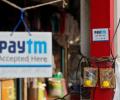
One 97 Communications Ltd, operating Paytm, is set to issue its first bonus shares, following a landmark year of achieving its maiden full-year profit and gaining significant market share. The board will meet on July 20 to decide on the bonus issue, reflecting confidence in its financial strength and aiming to improve stock accessibility for retail investors.

The Nifty IT index has been one of the worst sectoral performers in calendar year 2026, losing nearly 29 per cent till date compared to the 8 per cent dip in the Nifty 50 index.
